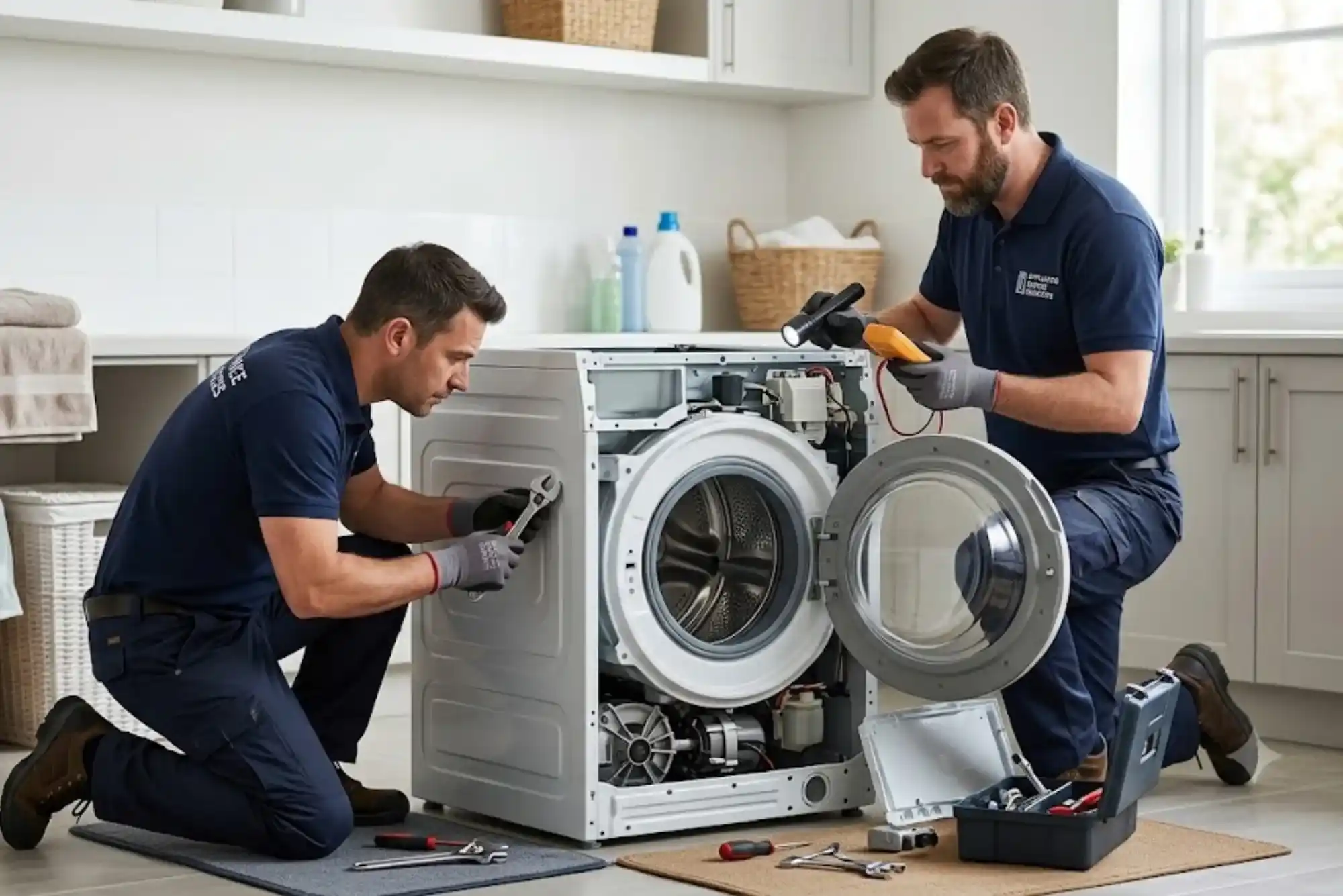
A washing machine is one of those home appliances people rarely think about until something goes wrong. You load your clothes, press start, and expect a quiet cleaning cycle. But when your washing machine suddenly starts making loud banging, grinding, or vibrating sounds, it becomes impossible to ignore.
A washing machine making loud noise repair issue is often an early warning sign that one or more internal components are struggling. While some sounds may come from simple problems like an uneven load, others can indicate damaged bearings, worn suspension parts, or problems inside the drum system.
Many homeowners make the mistake of continuing to use a noisy washer, hoping the problem will disappear. Unfortunately, unusual sounds rarely fix themselves. In many cases, ignoring the warning signs allows a small repair issue to become a much bigger and more expensive problem.
Understanding Why Your Washing Machine Is Making Loud Noise
Every washing machine produces some level of operational sound. The motor runs, water enters, and the drum rotates during different cycles. However, a sudden change in noise level usually means something has changed inside the appliance.
Professional technicians usually begin diagnosis by identifying when the noise appears. Is it happening during washing, spinning, draining, or only when the drum reaches high speed? This simple observation can provide important clues about the faulty component.
Common Causes Behind a Noisy Washing Machine
- Unbalanced laundry loads: Heavy clothes grouped on one side of the drum can create strong vibrations and banging sounds during the spin cycle.
- Worn drum bearings: Damaged bearings can produce deep grinding or rumbling noises as the drum rotates.
- Loose internal components: Small parts, screws, or damaged fittings may create clicking or knocking sounds.
- Weak shock absorbers: When suspension components lose their strength, the washing machine may shake excessively.
- Blocked drain pump: Objects trapped inside the pump can cause unusual sounds during water drainage.
Different Washing Machine Sounds and What They Indicate
| Noise Type | Possible Reason | Suggested Solution |
|---|---|---|
| Loud banging | Unbalanced load or suspension issue | Balance the load and inspect internal parts |
| Grinding noise | Damaged drum bearings | Professional inspection and repair |
| Clicking sound | Foreign object inside drum or pump | Remove object and check components |
| Heavy vibration | Leveling problem or worn shock absorbers | Adjust position or replace damaged parts |
Simple Checks Before Calling a Repair Expert
Before arranging professional service, homeowners can perform a few basic checks. These steps may help identify whether the issue is minor or requires technical attention.

- Make sure the washing machine is placed on a flat and stable surface.
- Check if the noise only appears with heavy loads.
- Remove coins, buttons, or other objects from clothing pockets.
- Listen carefully during washing, spinning, and draining cycles.
If the machine continues making unusual sounds after these checks, the problem may involve internal mechanical parts. Issues related to drum movement, vibration control, or damaged components usually require professional diagnosis.
For example, damaged suspension parts are a common reason behind excessive shaking. Understanding the role of washing machine shock absorbers can help homeowners recognize why their appliance becomes unstable during operation.
Early detection is the key to avoiding major appliance failures. In the next section, we will explore professional repair solutions, prevention methods, expert recommendations, and common questions about noisy washing machines.
Professional Solutions for Washing Machine Making Loud Noise Repair
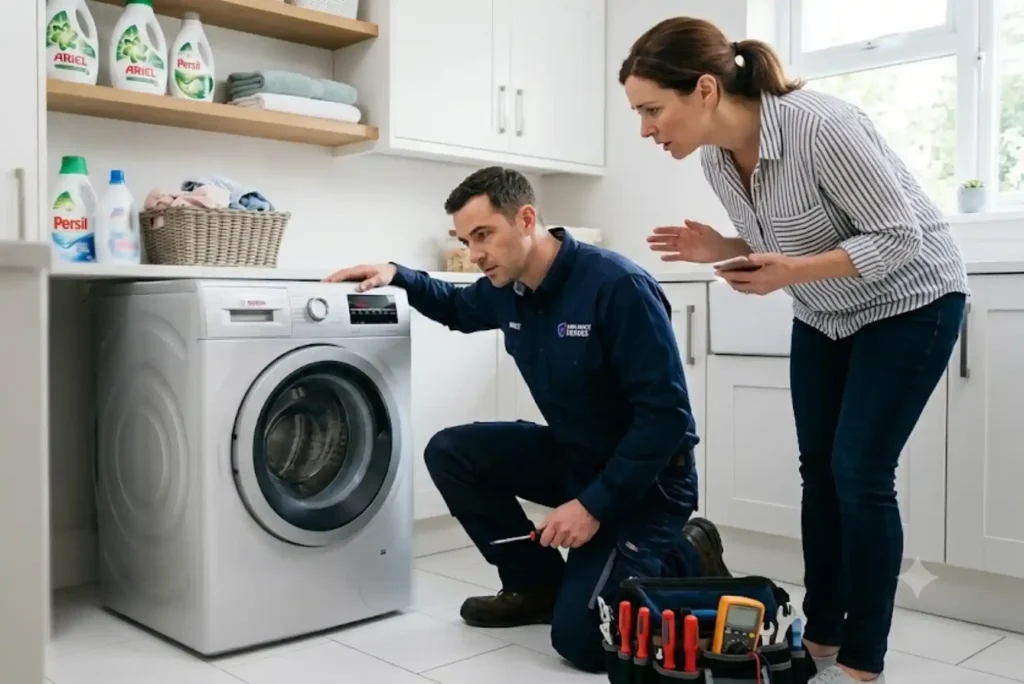
When a washing machine starts producing unusual sounds, the right repair method depends on the actual cause behind the noise. A simple adjustment may solve minor vibration problems, but mechanical failures require proper tools and technical knowledge.
A professional technician does not only focus on the sound itself. They inspect the complete washing system, including the drum assembly, motor, suspension system, and drainage components, to find the real source of the problem.
Repairing Damaged Drum and Bearing Problems
One of the most common reasons behind a loud washing machine is a damaged drum bearing. Bearings help the drum rotate smoothly, but continuous use, moisture exposure, and normal wear can reduce their performance over time.
When bearings start failing, homeowners usually notice a loud humming, grinding, or roaring sound that becomes stronger during the spin cycle. If ignored, damaged bearings can affect other drum components and increase repair complexity.
In such cases, professional washing machine drum repair services can help inspect the drum condition and determine whether repair or replacement is required.
Fixing Vibration and Movement Issues
Excessive movement is another major reason why homeowners search for washing machine noise solutions. A machine that shakes, jumps, or hits the cabinet during spinning may have problems with leveling, shock absorbers, or internal balance systems.
Small vibration issues can sometimes be corrected by adjusting the machine position. However, repeated shaking usually indicates that internal parts need inspection.
Signs Your Noisy Washing Machine Needs Professional Attention
Not every sound requires immediate repair, but certain warning signs should never be ignored. Continuing to operate a damaged appliance can put additional stress on other components.
- The washing machine produces louder sounds with every cycle.
- The drum moves unusually or feels loose.
- The appliance stops spinning correctly.
- There is a burning smell along with unusual noise.
- The machine vibrates even when the load is balanced.
A trained technician can identify hidden problems through detailed inspection and testing. Professional washer diagnostics service helps determine whether the issue comes from mechanical parts, electrical systems, or general wear.
How to Prevent Future Washing Machine Noise Problems
Preventive care plays an important role in keeping a washing machine quiet and efficient. Many noise-related problems develop slowly because of poor maintenance habits or incorrect usage.
Simple Maintenance Practices:
- Avoid overloading the washing machine because excessive weight increases pressure on the drum and suspension system.
- Keep the appliance properly balanced and check that all feet are firmly placed on the floor.
- Clean the drum, filters, and detergent areas regularly to maintain smooth operation.
- Remove objects such as coins, keys, and small items from clothes before washing.
- Schedule regular inspections, especially for older washing machines.
Regular maintenance helps identify early signs of wear before they turn into serious failures. Professional washing machine preventive maintenance can improve reliability and reduce unexpected breakdowns.
Frequently Asked Questions
Why is my washing machine making a loud noise during spinning?
The most common causes are unbalanced loads, damaged drum bearings, weak shock absorbers, or suspension problems. If balancing the load does not solve the issue, professional inspection may be required.
Can a noisy washing machine damage other parts?
Yes. A small mechanical problem can put extra pressure on other components. For example, damaged bearings can affect the drum system if the machine continues operating for a long time.
Should I repair or replace my noisy washing machine?
The decision depends on the appliance age, repair cost, and damaged component. Minor repairs are usually worthwhile, while major failures on very old machines may require replacement consideration.
How can I reduce washing machine vibration?
Start by checking the machine level, reducing overloaded cycles, and ensuring the appliance is placed on a stable surface. If vibration continues, internal suspension parts may need inspection.
How often should a washing machine receive maintenance?
Regular checks help maintain performance, especially for frequently used machines. Maintenance schedules depend on usage, machine condition, and manufacturer recommendations.
Conclusion
A washing machine making loud noise repair problem should be treated as an important warning instead of a minor inconvenience. Whether the cause is a simple imbalance, damaged bearings, or worn suspension components, identifying the problem early can save time and prevent costly repairs.
A quiet and efficient washing machine depends on proper usage, regular maintenance, and timely professional support. By paying attention to unusual sounds and arranging expert inspection when needed, homeowners can extend the life of their appliance and avoid unexpected breakdowns.
Related Reading: Washing Machine Error Codes Explained
Related Reading: Washing Machine Noise Problem Repair & Maintenance
Related Reading: How Much Does Washing Machine Repair Cost
Related Reading: Washing Machine Not Spinning Issue Repair
Related Reading: Cheap Washing Machine Repair
Related Reading: Front Load Washing Machine Repair
Related Reading: Washing Machine Noise Problem Repair & Maintenance