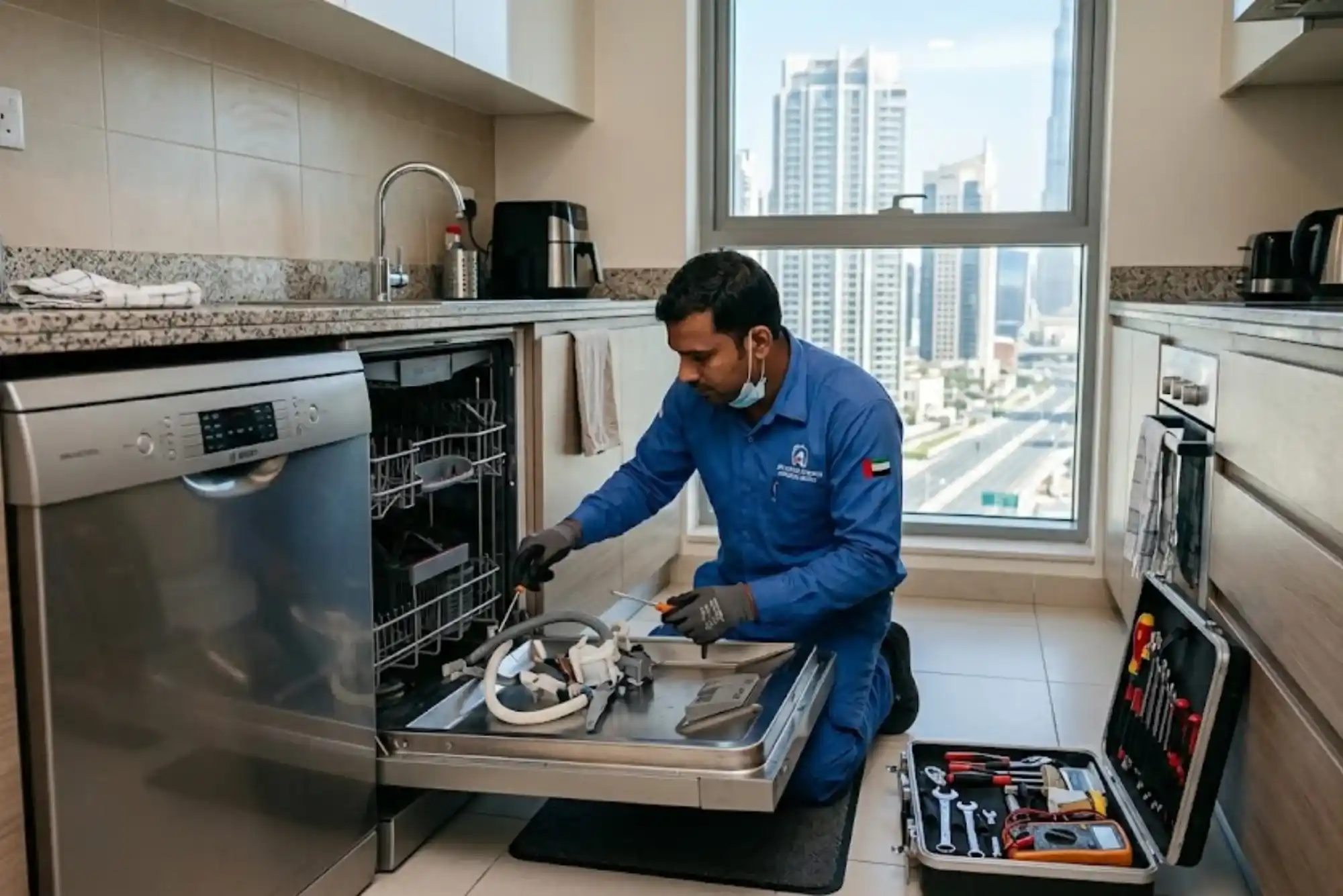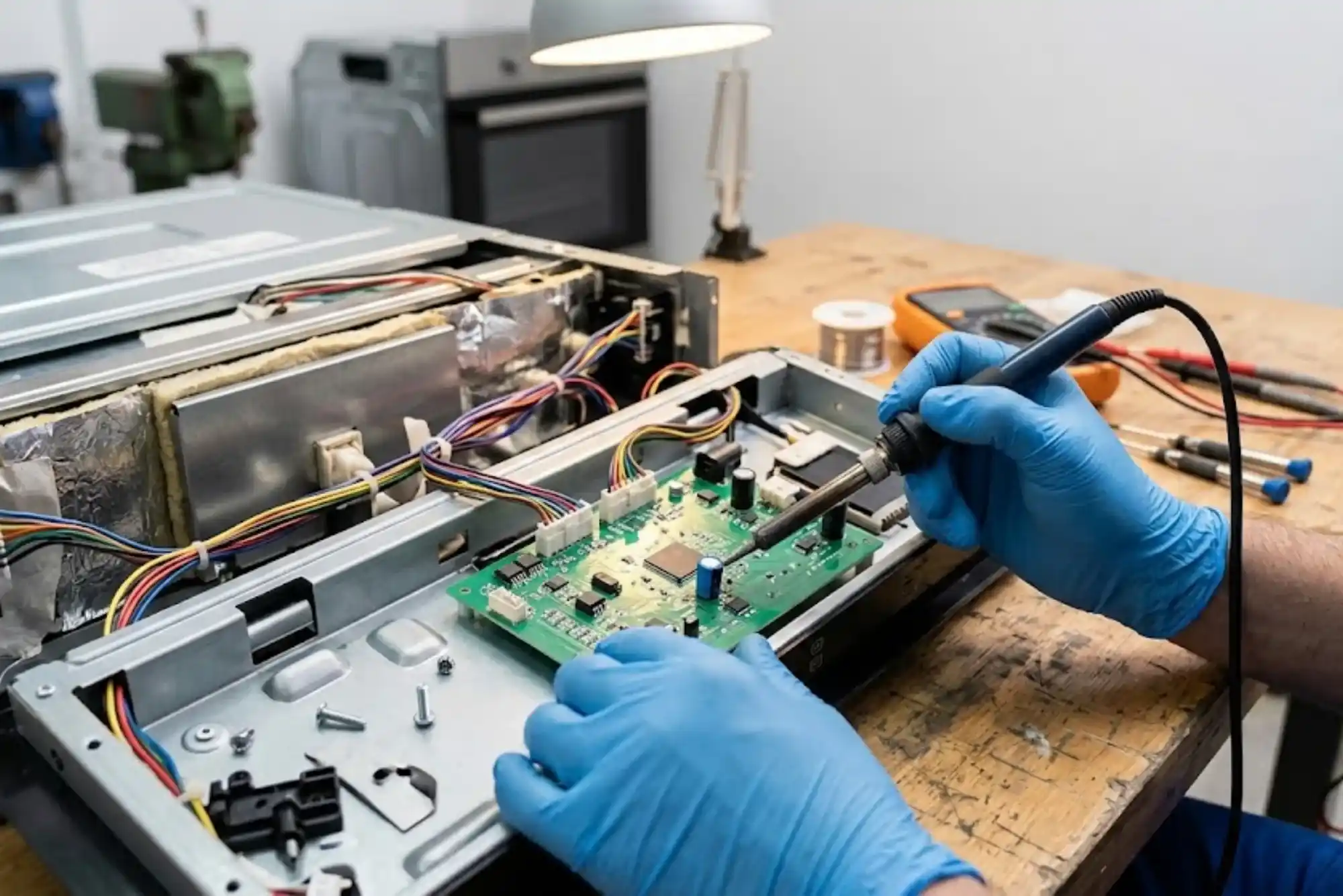
Understanding Oven Electronic Component Repair
Oven Electronic Component Repair involves diagnosing, repairing, or replacing the electrical and electronic parts responsible for controlling an oven’s heating, temperature, display, timing, and operating functions. When an oven stops responding, displays an error code, heats inconsistently, or fails to start, the underlying problem may involve an electronic control board, temperature sensor, wiring connection, power supply board, or another internal component.
Modern electric ovens rely on interconnected electronic systems to manage cooking temperatures and operating programmes. A fault in one component can affect several functions, making accurate diagnosis essential before replacing expensive parts.
For homeowners in Dubai, professional electronic oven repair can help restore appliance functionality while avoiding unnecessary component replacement. Hafixer provides home appliance repair information and service assistance for customers seeking solutions to oven and other household appliance problems.
What Is Electronic Component Repair in an Oven?
Electronic component repair is the technical process of identifying and resolving faults within an oven’s electrical and electronic control systems. These components receive electrical power, process operating instructions, monitor temperature conditions, and coordinate the oven’s functions.
The electronic control system may include a main control board, user interface, temperature sensor, display module, power supply circuitry, relays, connectors, and associated wiring.
The exact arrangement depends on the oven manufacturer, model, and design. Some ovens use separate control and power boards, while others integrate several functions into a single electronic assembly.

An important distinction is that electronic repair is not necessarily the same as replacing an entire control board. A technician must first establish whether the problem originates from a damaged component, a loose connection, an external power issue, or another appliance fault.
Common Electronic Components That Require Oven Repair
Understanding the individual components helps homeowners recognise possible causes of oven malfunctions.
Oven Electronic Control Board Repair
The electronic control board acts as the central control unit of an electronically managed oven. It processes user settings and coordinates different operating functions.
A faulty control board may cause the oven to stop responding, operate incorrectly, or display unusual error messages.
Oven Electronic Control Board Repair involves inspecting the board, connectors, power supply, and related circuitry. Depending on the damage and manufacturer specifications, a technician may repair the board or recommend replacement.
Electric Oven Circuit Board Repair
The circuit board contains electronic components and electrical pathways that allow different oven systems to communicate.
Damage to circuit tracks, electronic components, connectors, or soldered joints can interrupt normal operation.
Electric Oven Circuit Board Repair requires appropriate diagnostic equipment and technical knowledge. Component-level repair should only be attempted when the board design and manufacturer guidance permit it.
Oven PCB Repair Service
A printed circuit board (PCB) supports the electronic components responsible for processing and distributing control signals.
An oven PCB may develop faults due to electrical damage, overheating, moisture exposure, or component deterioration.
An Oven PCB Repair Service should begin with a detailed inspection rather than immediately replacing the complete assembly. However, some damaged boards cannot be safely or economically repaired and require an approved replacement.
Oven Control Panel Repair
The control panel allows users to select temperatures, cooking modes, timers, and other settings.
When its buttons become unresponsive, touch controls stop working, or settings cannot be selected, the problem may involve the interface board, connection cables, or main control electronics.
Oven Control Panel Repair focuses on identifying the defective section and restoring communication between the user interface and the oven’s control system.
Oven Digital Display Repair
Digital displays provide information about cooking temperature, time, selected programmes, and error conditions.
A blank screen, flickering display, missing characters, or incorrect information may indicate a display module problem or an issue with the power supply or control board.
Oven Digital Display Repair requires checking the display assembly and its electrical connections to determine the actual cause.
Oven Timer Repair Service
Electronic timers help manage cooking duration and programmed operating functions.
A timer malfunction may prevent the oven from starting, interrupt a cooking programme, or display an incorrect time.
An Oven Timer Repair Service involves inspecting the timer controls, interface connections, and associated electronic circuits.
Oven Temperature Sensor Repair
Temperature sensors monitor the oven’s internal temperature and provide information to the control system.
If a sensor becomes defective or its wiring develops a fault, the oven may heat inaccurately, produce temperature-related error codes, or fail to maintain the selected setting.
Oven Temperature Sensor Repair involves checking the sensor and its connections against the manufacturer’s specified testing procedure.
Oven Power Supply Board Repair
The power supply board distributes electrical power to different electronic sections of the oven.
A fault in this assembly may cause the control panel to become unresponsive or prevent electronic functions from operating correctly.
Oven Power Supply Board Repair requires checking the relevant electrical connections, protective components, and power supply circuitry.
How Oven Electronic Component Repair Works
Professional oven electronic repair follows a diagnostic process designed to identify the source of the malfunction before repair work begins.
Initial Inspection and Oven Troubleshooting and Diagnostics
The process begins by understanding the symptoms reported by the homeowner. The technician may ask when the problem started, whether the oven displays an error code, and whether the appliance stopped working suddenly or gradually developed operational issues.
The technician then examines the appliance for visible damage, unusual smells, damaged connections, and other signs of electrical or electronic failure.
Oven Troubleshooting and Diagnostics may involve checking the power supply, control panel, sensor connections, wiring, and electronic assemblies using appropriate diagnostic instruments.
Manufacturer-specific error codes and technical documentation help narrow down the possible causes.
Testing Electronic Components
After identifying the suspected faulty area, the technician checks the relevant components according to the appliance’s service documentation.
This may involve testing sensor resistance, inspecting wiring continuity, examining connectors, or evaluating electronic board functions.
Testing should be performed with appropriate electrical safety precautions. Live electrical measurements must only be conducted by qualified personnel using suitable equipment and procedures.
Repairing or Replacing Faulty Components
Once the fault has been identified, the technician determines whether the component can be repaired or requires replacement.
Professional Oven Electronic Component Repair may involve repairing an eligible circuit board, replacing a damaged sensor, restoring an electrical connection, or installing a compatible control module.
The selected solution should consider the appliance model, component availability, repair feasibility, and manufacturer requirements.
Final Testing and Operational Verification
After the repair, the technician checks whether the affected functions operate correctly.
Depending on the repair, testing may include verifying the display, timer, temperature readings, heating operation, control settings, and relevant safety functions.
The objective is to confirm that the repaired system operates as intended without introducing additional electrical or functional problems.
Key Factors Affecting Oven Electronic Repair in Dubai
Dubai homeowners should consider several practical factors when arranging electronic oven repair.
Oven Brand and Model Compatibility
Different manufacturers use different electronic assemblies, control systems, connectors, and software configurations.
A replacement PCB that physically fits an oven is not necessarily compatible with its electronic system.
Technicians should identify the complete model number and verify the correct component before ordering or installing replacement parts.
Component Availability
Some electronic components may be available separately, while others are supplied as complete assemblies.
Availability can influence repair time and the choice between component-level repair and module replacement. Customers should request confirmation of availability before approving work.
Installation Environment
Kitchen conditions can influence appliance performance. Heat exposure, inadequate ventilation, accumulated dust, and moisture around electrical connections may contribute to problems.
Proper appliance installation and ventilation should be considered when diagnosing recurring electronic faults.
Electrical Supply and Wiring Conditions
An oven’s electrical connection must be suitable for its rated electrical requirements.
Damaged wiring, loose connections, unsuitable extension arrangements, and electrical supply problems should be investigated rather than automatically blaming the control board.
Dubai Electricity and Water Authority (DEWA) advises customers to use qualified technicians for electrical maintenance, avoid unsafe electrical connections, and follow precautions when operating high-power appliances.
Its guidance specifically recommends connecting heat-producing appliances such as electric ovens directly to an appropriate power outlet rather than using an extension connection.
Reference: DEWA Electrical Appliance Safety Guidance.
Benefits and Limitations of Professional Oven Electronic Repair
Professional electronic repair can provide several practical advantages when the fault is correctly diagnosed.
Targeted component repair: Identifying the defective electronic section can prevent unnecessary replacement of unrelated oven components.
Restored functionality: Repairing or replacing a faulty control module, sensor, or display can restore affected operating functions.
Reduced unnecessary expenditure: Component-level repair may be more economical than replacing a complete assembly when technically appropriate.
Improved operational reliability: Checking electrical connections and related components helps identify additional faults that could affect the repair.
Better maintenance decisions: A diagnostic inspection can help homeowners understand whether repairing an existing oven remains a practical option.
However, electronic repair also has limitations. Severely damaged circuit boards, unavailable manufacturer-approved components, incompatible replacement modules, or extensive electrical damage may make replacement more appropriate.
Repairing an older oven may also be less practical when several major components require attention. The technician should explain the available options before proceeding.
Common Mistakes to Avoid During Oven Electronic Component Repair
Incorrect troubleshooting can create additional problems and increase repair expenses.
One common mistake is assuming that every unresponsive oven has a damaged control board. A power supply issue, defective connection, door switch, or temperature sensor can produce similar symptoms.
Another mistake is replacing electronic modules without checking their compatibility. Control boards are designed for particular oven models and configurations, so the correct part number matters.
Homeowners should also avoid opening electronic compartments or attempting circuit repairs without the necessary technical training. Electric ovens contain hazardous electrical components, and some internal parts can retain dangerous electrical energy even after the appliance has been switched off.
Using incompatible replacement components is another risk. An unsuitable board or sensor may cause incorrect operation or further damage.
Finally, ignoring recurring error codes can delay proper diagnosis. Recording the displayed code and sharing it with the technician can make the inspection more efficient.
When Should You Contact an Oven Repair Technician?
Professional inspection is advisable when an oven repeatedly displays electronic error messages, the control panel becomes unresponsive, or the appliance behaves differently from its normal operating condition.
Other warning signs include a flickering digital display, incorrect temperature readings, a timer that fails to respond, repeated power interruptions, or unusual electrical smells.
Stop using the appliance if you notice burning smells, smoke, sparks, damaged electrical wiring, or signs of overheating. If it is safe to do so, isolate the appliance using its designated electrical isolator or circuit breaker. Do not touch exposed wiring or attempt to open the control compartment.
DEWA’s electrical safety guidance also emphasises replacing damaged electrical parts and using qualified technicians for maintenance.
Choosing a Professional Oven Electronic Repair Service in Dubai
Selecting an appropriate repair service is important because electronic oven systems require model-specific knowledge and safe diagnostic procedures.
Before approving a repair, homeowners should consider the technician’s experience with electronic oven systems, ability to diagnose control board faults, and familiarity with the appliance brand.
A reliable service assessment should explain the suspected fault, proposed repair, replacement component compatibility, and any relevant warranty conditions.
Customers should also ask whether the repair involves the original component, an approved replacement, or a compatible alternative. The distinction can affect appliance functionality and future maintenance.
For customers looking for a specialist, Hafixer offers information about its appliance repair services. Homeowners can explore the <a href=”https://hafixer.com/certified-oven-repair-company/“>Certified Oven Repair Company</a> page when considering professional oven repair assistance.
The repair quotation should clearly explain labour charges, component costs, additional work, and any applicable service conditions before the customer approves the job.
Repair or Replace: Which Option Is More Practical?
Deciding between electronic repair and complete component replacement depends on the actual condition of the oven.
| Situation | Practical consideration |
|---|---|
| Minor connection fault | Repairing the connection may be sufficient |
| Defective temperature sensor | Sensor replacement may resolve the issue |
| Damaged control board | Compare component-level repair with board replacement |
| Faulty display module | Check whether the display can be replaced separately |
| Extensive electronic damage | Evaluate the cost and feasibility of a larger repair |
| Repeated electrical failures | Investigate the underlying electrical cause before further repairs |
There is no universal repair-versus-replacement rule. The final decision should consider the oven’s age, condition, repair quotation, availability of suitable parts, and expected usefulness after repair.
Understanding Oven Electronic Repair Costs
The cost of Oven Electronic Component Repair in Dubai depends on the specific fault and the work required.
A sensor replacement, wiring repair, control panel repair, and complete electronic control board replacement involve different parts and labour requirements.
Other considerations include the oven brand, model, component availability, diagnostic requirements, and whether the technician needs to remove or dismantle an integrated appliance.
A reliable quotation should distinguish diagnostic charges, labour, replacement parts, and any additional service fees.
Hafixer’s specific pricing for individual electronic repairs is not publicly specified here. Customers should contact the service provider directly for a quotation based on their appliance model and diagnosed fault.
Avoid choosing a repair service based exclusively on the lowest initial quotation. The quality and compatibility of replacement parts, technical assessment, and clarity of service conditions are equally important considerations.
Preventing Future Oven Electronic Problems
Although electronic components can fail for different reasons, appropriate appliance care can help reduce avoidable problems.
Keep the oven’s ventilation areas clear and follow the manufacturer’s installation and cleaning instructions. Avoid allowing water or cleaning products to enter electronic control compartments.
Use the correct electrical connection specified for the appliance. Avoid unsuitable extension arrangements and have damaged plugs, cables, or connections inspected by a qualified professional.
Clean the oven according to the manufacturer’s instructions rather than applying excessive moisture around electronic controls.
Pay attention to unusual error messages, intermittent display problems, and unexpected operating behaviour. Early inspection may help identify a developing issue before it affects additional components.
For built-in ovens, proper installation and access to the appliance’s electrical isolation are also important considerations.
Final Thoughts on Oven Electronic Component Repair
Oven electronic faults can affect temperature regulation, cooking programmes, displays, timers, and overall appliance operation. Identifying the actual defective component is essential for selecting an appropriate repair solution.
Professional Oven Electronic Component Repair focuses on accurate diagnostics, compatible replacement parts, safe electrical procedures, and functional testing after the repair.
For homeowners in Dubai, choosing a qualified and experienced technician can help address electronic oven problems without unnecessary component replacement. Whether the issue involves an electronic control board, PCB, digital display, temperature sensor, or power supply module, a proper technical assessment provides a clearer path towards restoring the appliance.
1. What is Oven Electronic Component Repair?
Oven Electronic Component Repair involves diagnosing and repairing faulty electronic parts, including control boards, PCBs, temperature sensors, timers, displays, and power supply modules.
2. What are the signs of a faulty oven control board?
Common warning signs include an unresponsive control panel, unexpected error codes, a blank display, incorrect settings, or unusual operating behaviour. These symptoms can also result from other faults, so proper diagnosis is necessary.
3. Can an oven electronic control board be repaired instead of replaced?
Yes, some electronic control boards can be repaired if the damage is limited and suitable repair procedures are available. Severely damaged or unsupported boards may require replacement.
4. Why is my electric oven display not working?
A blank or malfunctioning display may result from a power supply issue, damaged display module, loose connector, or faulty control board. A technician should inspect the related electrical and electronic components.
5. How much does oven electronic component repair cost in Dubai?
The cost depends on the faulty component, oven model, replacement part availability, and labour requirements. Specific Hafixer repair prices are not publicly specified here, so customers should request a quotation.
6. Is it safe to repair oven electronic components at home?
Electronic oven repairs should be handled by qualified technicians because internal electrical components can present electric shock and injury risks. Homeowners should avoid opening control compartments or working on live electrical circuits.
Related Reading: What Changed in Your Realtionship — full guide