Washing Machine Error Codes Explained: Understanding Common Washer Problems
Modern washing machines are designed with advanced electronic systems that detect problems automatically. When something goes wrong, the appliance displays a specific code to help identify the issue.
Washing Machine Error Codes Explained provides homeowners with a better understanding of these messages, allowing them to recognize faults, prevent further damage, and know when professional assistance is required.
Error codes may appear confusing at first, but they are actually useful diagnostic tools. They help technicians and users identify problems related to water supply, drainage, sensors, motors, doors, and electronic components. Understanding these signals can save time and reduce unnecessary repairs.
Why Washing Machine Error Codes Are Important
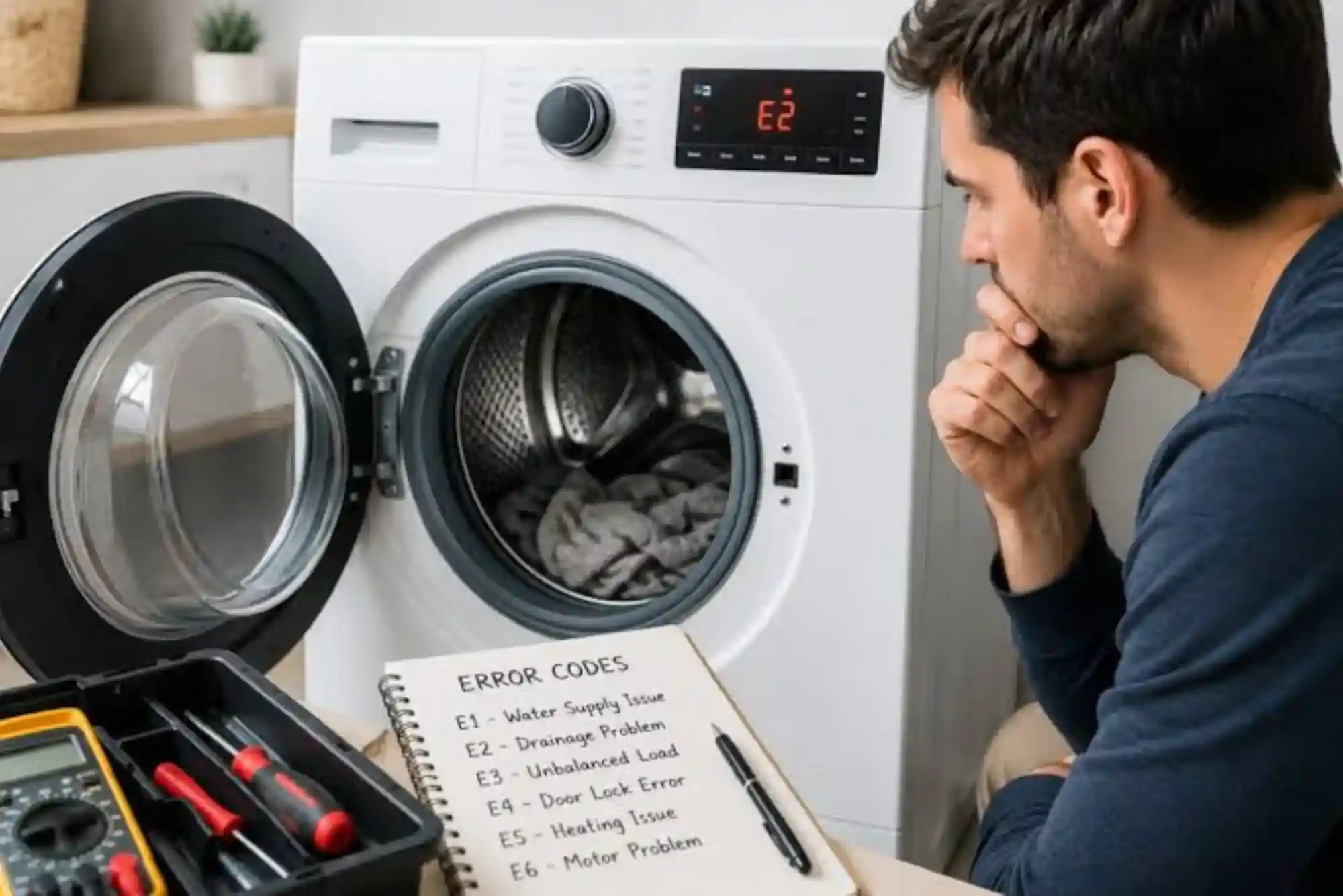
A washing machine error code is not just a random combination of letters and numbers. It represents information collected by the appliance’s internal control system. When sensors detect abnormal operation, the machine stops certain functions and displays a warning code.
These codes help prevent serious issues such as motor damage, water leaks, overheating, or electrical failures. Instead of guessing the cause of a problem, users can use the displayed code as a starting point for troubleshooting.
Common Reasons Washing Machines Display Error Codes
Different brands use different coding systems, but many error messages relate to similar problems. Some common causes include:
- Blocked drainage filters or damaged drain pumps
- Problems with water inlet valves or low water pressure
- Door lock or safety switch failures
- Motor and sensor-related faults
- Electronic control board issues
- Overloading or imbalance during washing cycles
For example, vibration-related errors may occur because of uneven loads or damaged internal components. Learning about problems such as washing machine overloading and vibration issues can help users avoid repeated errors caused by improper usage.
Understanding Different Types of Washer Fault Codes
Although every manufacturer has its own error code system, most washing machine faults fall into a few major categories. Recognizing these categories makes troubleshooting easier.
| Error Category | Possible Cause | Common Solution |
|---|---|---|
| Water Supply Errors | Blocked inlet filter, faulty valve, low pressure | Check water connections and inspect inlet components |
| Drainage Errors | Clogged hose, drain pump problem | Clean filters and check drainage system |
| Door Lock Errors | Damaged lock mechanism or sensor | Inspect door alignment and locking parts |
| Motor Errors | Motor, belt, or sensor failure | Professional inspection may be required |
How Error Codes Help With Faster Repairs
When a washing machine displays a fault code, it gives valuable information before a repair technician begins testing. Instead of checking every component, professionals can focus on the specific system connected with that error.
Homeowners can also use these codes to perform simple checks, such as cleaning filters, reducing excessive loads, or confirming that water connections are working correctly.
However, some errors require technical knowledge because they involve electrical parts, motors, or control boards. Attempting complex repairs without proper tools may increase the damage and repair cost.
Common Washing Machine Errors Users Should Know
Water Inlet and Filling Errors
One of the most common washing machine problems occurs when the appliance cannot fill with water correctly. This can happen due to blocked inlet screens, faulty valves, or insufficient water pressure.
Checking the water supply and cleaning the inlet filter can sometimes solve the issue. If the problem continues, professional diagnosis may be needed to test internal components.
Drainage and Pump Related Errors
Drain-related error codes usually appear when dirty water cannot leave the washing machine properly. A blocked drain hose, clogged filter, or damaged pump can prevent normal operation.
Regular maintenance and cleaning can reduce the chances of these failures. Services like common washing machine problem diagnosis help identify repeated faults and provide suitable repair solutions.
Many modern appliances also record error history, allowing technicians to understand previous failures. This information helps create a more accurate repair approach instead of replacing parts unnecessarily.
Steps to Take When Your Washing Machine Shows an Error Code
When an error code appears, users should avoid immediately assuming that a major component has failed. A few simple checks can sometimes resolve minor issues and restore normal operation.
- Read the error message carefully: Note the exact code displayed on the screen because it provides important diagnostic information.
- Restart the washing machine: Disconnecting the appliance for a few minutes may clear temporary electronic glitches.
- Check basic connections: Inspect water supply lines, drainage hoses, and power connections.
- Clean accessible parts: Filters and detergent areas should be checked for blockages or buildup.
- Contact a professional when needed: Persistent errors often indicate internal component problems requiring expert testing.
When DIY Troubleshooting Is Not Enough
Simple maintenance tasks can solve minor washing machine issues, but some error codes indicate deeper mechanical or electrical failures. Problems involving motors, sensors, control boards, and wiring should be handled carefully because incorrect repairs can create additional damage.
Professional technicians use diagnostic equipment and technical experience to identify the actual cause of the fault. Instead of replacing multiple parts through trial and error, they can test specific components and recommend the correct repair.
Expert Tip: Always record the exact error code, the washing cycle when it appears, and any unusual sounds or symptoms. This information helps technicians diagnose the problem faster and prevents unnecessary part replacements.
The Role of Professional Washing Machine Diagnostics
A proper diagnostic process is essential for long-term appliance performance. Professional inspection usually includes checking electrical connections, testing sensors, examining mechanical components, and verifying that the control system is operating correctly.
A detailed inspection is especially important when error codes appear repeatedly. Recurring faults may indicate an underlying problem that requires more than a temporary reset. Professional services such as professional washer diagnostics service help identify hidden issues before they become expensive repairs.
Preventing Future Washing Machine Error Codes
Regular care and proper usage can significantly reduce the frequency of washing machine errors. Many problems happen because of neglect, incorrect loading habits, or lack of maintenance.
- Avoid placing excessive clothes inside the drum.
- Clean detergent drawers and filters regularly.
- Check hoses for leaks or damage.
- Keep the washing machine level to reduce vibration.
- Follow the manufacturer’s maintenance recommendations.
Preventive maintenance improves washing performance and helps extend the appliance’s working life. Small actions such as cleaning filters and checking connections can prevent many common failures.
Frequently Asked Questions About Washing Machine Error Codes
What does a washing machine error code mean?
A washing machine error code is a warning message generated by the appliance’s control system. It identifies a detected problem related to components such as water supply, drainage, sensors, or electrical systems.
Can I fix washing machine error codes myself?
Some simple errors can be resolved by checking water connections, cleaning filters, or restarting the appliance. However, complicated faults involving motors, electronics, or wiring usually require professional repair.
Why does my washing machine keep showing the same error code?
Repeated error codes usually mean the original problem has not been completely fixed. It may indicate a failing component or an issue that requires proper diagnosis.
Do all washing machine brands use the same error codes?
No. Different manufacturers use different codes and meanings. The same code can represent different issues depending on the brand and model of the washing machine.
How can I avoid washing machine error problems?
Regular cleaning, correct loading, proper detergent usage, and timely maintenance can reduce many common washing machine problems.
Conclusion: Understanding Washing Machine Error Codes Explained
Understanding Washing Machine Error Codes Explained helps homeowners recognize appliance problems and make better repair decisions. These codes provide useful information about faults related to water systems, drainage, motors, sensors, and electronic controls.
While basic troubleshooting can solve some minor issues, repeated or complex error messages should not be ignored. Professional inspection ensures accurate diagnosis and prevents unnecessary damage. With proper maintenance and timely repairs, a washing machine can continue providing reliable performance for years.
Learning how your appliance communicates problems through error codes is one of the best ways to protect your investment and maintain efficient washing performance.