When your washing machine suddenly stops working the way it should, daily life can become unexpectedly stressful. Few household appliances are relied upon as heavily as a washing machine, and when it fails, laundry piles up fast. Whirlpool machines are known for durability and performance, but even the best appliances experience wear and tear over time. Understanding how problems develop, what causes them, and how professional whirlpool washing machine repair can restore proper function helps homeowners make informed decisions without panic or guesswork.
A malfunctioning washer is rarely the result of a single mistake. It is usually a combination of long-term usage, mechanical stress, electrical wear, and environmental factors such as water quality. The good news is that most Whirlpool washer faults are completely repairable when detected early and handled by trained technicians.
How Whirlpool Washing Machines Are Designed to Perform
Whirlpool washing machines are designed for reliable performance under frequent use. Their engineering balances power efficiency, water regulation, drum rotation control, and electronic monitoring. Modern models include smart sensors, load detection, programmable wash cycles, and safety shutoff features. These advanced systems give a smooth washing experience but also mean that when something fails, accurate diagnosis becomes critical.
A Whirlpool washer works as a coordinated system where the motor, control board, inlet valve, drain pump, transmission, belts, and internal sensors all depend on one another. When a single part starts malfunctioning, the rest of the system reacts. This is why professional whirlpool washing machine repair is rarely about replacing one obvious piece. It often involves a deeper understanding of how the machine communicates internally.
The Most Overlooked Causes of Washer Failure
Many breakdowns begin quietly with minor warning signs that are easy to ignore. Subtle changes in sound during spinning, small water leaks near the base, delayed filling, slow draining, or unusual vibration during cycles all indicate emerging issues. These early symptoms are often connected to worn bearings, stressed belts, partially blocked pumps, or electrical contact inconsistencies.
Electrical faults may develop from power surges, unstable voltage, or internal control board aging. Mechanical wear occurs naturally as parts grind against one another over thousands of cycles. Water quality also plays a significant role because mineral deposits can clog valves, restrict hoses, and harden rubber seals over time.

Ignoring these signs leads to cascading failures where one damaged part strains the next until total system shutdown occurs. This is why timely whirlpool washing machine repair is not only about fixing problems but about preventing the machine from reaching a point where replacement becomes the only option.
Water Filling Problems and Their Hidden Triggers
Water-related issues are among the most common reasons Whirlpool washers fail to complete cycles. If the machine is slow to fill, fails to fill entirely, or overfills unexpectedly, the problem is often associated with the inlet valve, pressure switch, or control board communication.
Sediment buildup inside the inlet valve restricts flow gradually and eventually cuts it off. Pressure switches that regulate water levels can become inaccurate when residue forms inside their air tubes. When electronic modules misread sensor data, the machine may attempt to compensate incorrectly, leading to abnormal fill behavior.
Professional whirlpool washing machine repair focuses not only on replacing failed components but also on addressing why the failure occurred. Without proper cleaning, calibration, and system testing, a washer may appear fixed briefly only to fail again weeks later.
Drainage Failures and Their Long-Term Effects
When a washer fails to drain fully, it affects both washing quality and internal system health. Standing water inside the drum leads to odors, mildew growth, and microbial contamination. More critically, incomplete drainage strains the motor during subsequent spin cycles and damages electrical insulation inside pump wiring.
Drain pump blockages are often caused by lint accumulation, fabric fibers, detergent residue, and small foreign objects. Over time, these obstructions force the pump motor to work harder than designed. Eventually, overheating causes internal motor windings to degrade.
Correct whirlpool washing machine repair requires removing the obstruction, verifying pump motor integrity, and confirming that drainage channels are fully clear. Skipping any part of this process increases the likelihood of repeat failure.
Why Spin Cycle Problems Are More Serious Than They Seem
Spin cycle failures are frequently blamed on overloaded drums, but persistent spin issues often originate deeper inside the machine. The drive motor, belt system, clutch assembly, and suspension system work together to stabilize the tub while it reaches high speeds. When any of these components weaken, the washer may vibrate violently, stop spinning altogether, or shut down mid-cycle.
Suspension rods lose tension with age, making the drum unstable. Drive belts stretch naturally over time, reducing torque transfer. Control boards may detect excessive vibration and automatically halt spinning as a safety measure.
Attempting to keep using a washer that struggles to spin causes extensive strain throughout the drivetrain. Professional whirlpool washing machine repair prevents catastrophic motor damage by correcting imbalance and restoring mechanical alignment early.
Electrical and Control Board Failures in Modern Whirlpool Washers
Electronic control boards serve as the brain of modern Whirlpool washers. They regulate water intake, temperature, timer functions, drum speed, and safety systems. When these boards malfunction, the washer may show error codes, freeze mid-cycle, fail to respond to button presses, or power on but not operate.
Control boards fail due to power surges, moisture penetration, aging circuitry, and thermal stress. Because these boards communicate with every part of the washer, replacement requires precise model compatibility and software calibration.
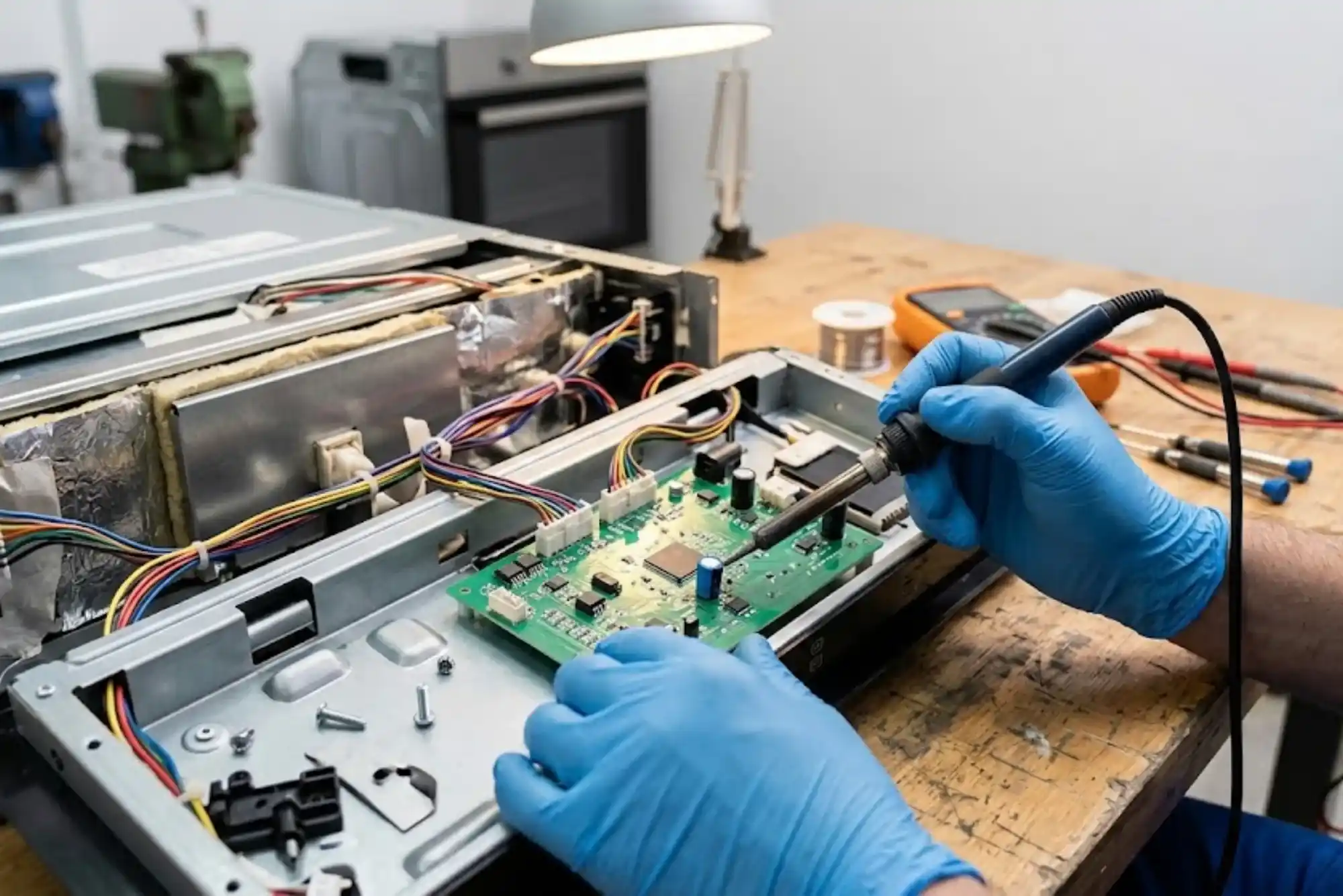
True whirlpool washing machine repair at this level requires advanced diagnostic equipment and experience interpreting electronic fault responses. Random part swapping often results in costly mistakes because it fails to address the underlying electrical pathways involved.
The Silent Damage Caused by Leaks
Even small, unnoticed leaks under the washer pose serious long-term risks. Water can seep into motor windings, corrode frame components, weaken floor structures, and damage nearby electrical outlets. Leaks also create ideal environments for mold and bacteria growth, affecting both air quality and hygiene.
Door seal wear, loose hose connections, deteriorating tub seams, and failing pump gaskets are among the most frequent leak sources. A proper whirlpool washing machine repair process includes pressure testing, seal inspection, hose verification, and drainage alignment checks.
Fixing the visible drip is not enough. The source, path of water travel, and potential secondary damage must all be evaluated to ensure the washer is fully restored to safe operation.
The Impact of Improper Detergent Use on Washer Health
Many washer failures are indirectly caused by detergent misuse. Using excess detergent creates heavy foam buildup that interferes with water sensors and coats internal drainage pathways with residue. High-efficiency washers require precise detergent ratios, yet many users unknowingly double the recommended amount.
Over time, soap residue thickens into sludge inside the tub, drain hoses, pressure tubing, and pump housing. This disrupts drainage efficiency and causes recurring error conditions that mimic hardware failure.
Professional whirlpool washing machine repair often includes deep internal cleaning to remove accumulated residue. Without this cleaning, newly installed components may fail prematurely due to the same contamination that damaged the original part.
How Timely Repairs Save the Most Money Long Term
Delaying washer repairs almost always increases total cost over time. A worn belt that could be replaced inexpensively may damage the motor if allowed to slip excessively. A failing pump motor may short the main control board when insulation breaks down. A small door seal leak may rust internal structural supports beyond repair.
Early whirlpool washing machine repair prevents minor mechanical defects from escalating into major electrical and structural failures. It also preserves energy efficiency, as struggling components consume far more electricity than properly aligned systems.
Investing in prompt professional service protects both the washer and the surrounding home environment from secondary damage that easily exceeds the initial repair cost.
Why Professional Diagnosis Is More Accurate Than Guesswork
A washer may display symptoms that mimic multiple causes. Poor spinning can appear as a motor issue, belt problem, control error, or suspension failure. Drainage problems may stem from a clogged filter, obstructed hose, weak pump motor, or faulty pressure sensor.
Professional whirlpool washing machine repair uses systematic testing procedures that isolate each component under load. Voltage testing, resistance measurement, vibration analysis, flow rate verification, and sensor feedback evaluation are used together to reach accurate conclusions.
Accurate diagnosis eliminates wasted parts, unnecessary labor, and repeated visits. It also ensures that all related components affected by the fault are inspected, preventing partial repairs that fail prematurely.
The Role of Preventive Maintenance in Extending Washer Life
Regular maintenance is often overlooked because washing machines operate quietly in the background of daily life. Yet preventive care dramatically extends both performance and lifespan. Cleaning filters, inspecting hoses, verifying drum alignment, recalibrating sensors, clearing detergent buildup, and lubricating moving parts all reduce long-term wear.
Specialized whirlpool washing machine repair services also include firmware updates for select models, ensuring that control systems continue functioning as intended. Minor adjustments during servicing prevent cumulative mechanical stress that eventually leads to breakdowns.
Machines that receive professional maintenance consistently exceed their expected service life by several years while retaining strong wash performance and lower operating costs.
How Water Pressure Affects Washer Performance
Both low and excessively high water pressure cause long-term damage to washer systems. Insufficient pressure leads to weak cleaning performance and extended cycle times. Excessive pressure strains inlet valves, weakens hose connections, and increases the risk of sudden leaks.
In regions with unstable municipal water pressure, pressure regulation valves and reinforced hoses become necessary safeguards. Professional whirlpool washing machine repair includes pressure measurement and flow stability testing to determine whether external plumbing factors are contributing to internal faults.
Correcting water pressure issues protects delicate valve solenoids and sensor modules that are easily damaged by hydraulic shock.
Why Whirlpool Washers Require Brand-Specific Repair Knowledge
While many mechanical principles overlap across washer brands, Whirlpool designs its electronic logic, sensor placement, control algorithms, and drivetrain structures differently from other manufacturers. Generic repairs often fail to restore optimal performance because Whirlpool machines rely heavily on precise electronic coordination between parts.
Effective whirlpool washing machine repair requires familiarity with brand-specific error patterns, proprietary control board logic, model-based wire routing, and component compatibility standards. Incorrect replacement parts may fit physically but communicate improperly with control systems.
Brand-trained technicians understand platform variations within Whirlpool’s product lines, ensuring that each repair aligns with factory specifications rather than generic assumptions.
The Consequences of Repeated Temporary Fixes
Temporary fixes often mask problems without truly resolving them. Bypassing sensors, shorting switches, or disabling safety functions allows the machine to operate briefly while underlying damage continues to worsen. These shortcuts may seem convenient in the moment but dramatically increase long-term failure risk.
Repeated temporary whirlpool washing machine repair attempts often lead to full system replacement when the machine eventually suffers irreversible electronic damage or structural instability. Permanent repair restores both mechanical integrity and electronic safeguards, protecting users as well as the appliance.
True repair is always about restoring original engineering balance, not simply forcing operation through damaged systems.
Conclusion
A malfunctioning washing machine affects not only convenience but also hygiene, household efficiency, and long-term safety. Whirlpool washers are engineered for reliability, but even the strongest systems require expert care as they age. From water intake failures to control board errors, from vibration problems to silent leaks, each issue reflects underlying mechanical or electrical stress that must be diagnosed accurately.
Professional whirlpool washing machine repair focuses on restoring complete system balance rather than addressing surface symptoms alone. Early intervention prevents escalating damage, protects surrounding environments, and significantly reduces lifetime ownership costs. Whether the issue involves water flow regulation, electronic communication, drivetrain stress, or environmental factors, expert service ensures long-term stability and dependable performance.A properly repaired Whirlpool washer does more than resume washing clothes. It restores confidence that one of the home’s most essential systems will continue working quietly and efficiently for years ahead.