The dishwasher has become one of the most appreciated kitchen appliances in modern households, offering convenience, hygiene, and time-saving benefits for busy families and individuals alike. While built-in dishwashers have long been the standard option, portable dishwashers are gaining attention for their flexibility, affordability, and space-saving features.
As urban living spaces shrink and rental lifestyles become more common, many households are exploring whether a portable dishwasher might be the right solution for them. However, like any appliance, portable dishwashers come with both strengths and drawbacks. Understanding these aspects is important before making a purchase decision.
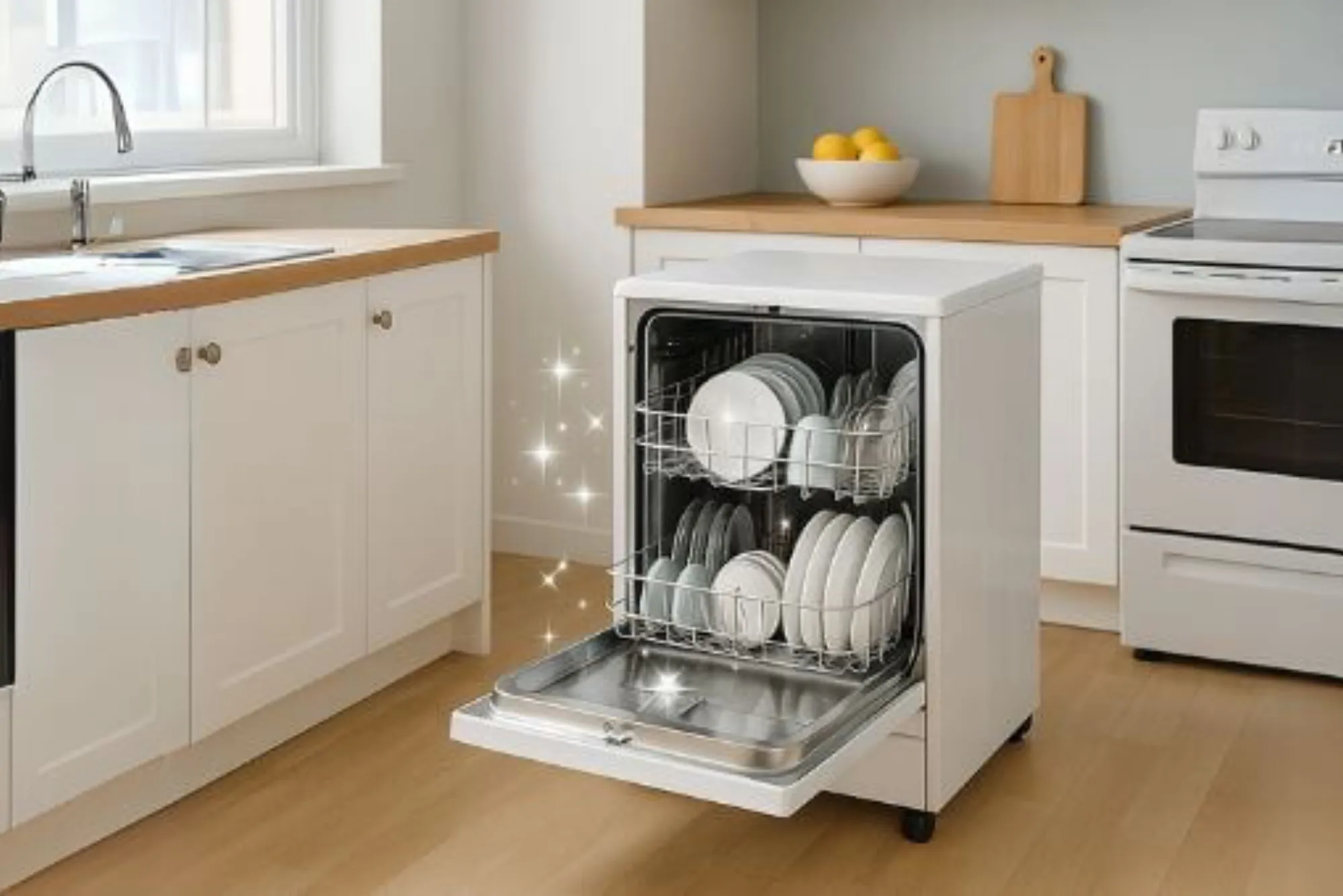
Portable dishwashers are designed to function much like standard dishwashers but with added mobility. They are typically free-standing units that can be wheeled into place when needed, connected to a kitchen faucet for water supply, and rolled away for storage when not in use. Some models even double as countertop dishwashers, appealing to those with very limited space.
While their flexibility makes them appealing, performance factors, durability, and practicality may raise questions for those accustomed to built-in machines. In this article, we will explore the pros and cons of portable dishwashers in depth so you can determine whether they are the right fit for your home and lifestyle.
Convenience and Space-Saving Design
One of the greatest appeals of a portable dishwasher is its convenience for homes where permanent installation is not an option. Many people live in apartments or rental units where built-in appliances are either not available or cannot be installed due to landlord restrictions. A portable dishwasher solves this problem by allowing you to enjoy the benefits of automated dishwashing without altering plumbing or cabinetry.
For households with small kitchens, where counter space and cabinetry are limited, the compact footprint of a portable dishwasher can be a game-changer. Instead of sacrificing precious storage space for a built-in unit, a portable dishwasher can be wheeled into use only when necessary and then stored in a corner or utility space. This makes it particularly suitable for studio apartments, shared living spaces, or smaller homes.

Cost-Effectiveness Compared to Built-In Models
Another significant advantage is cost. Portable dishwashers generally cost less than their built-in counterparts. For families or individuals working within a budget, this affordability makes them an attractive option. In addition to the lower purchase price, installation costs are almost nonexistent. With no need to hire a plumber or contractor, the upfront investment is considerably less.
In many cases, portable dishwashers also provide energy efficiency features that align with modern standards. They are designed to conserve both electricity and water, meaning that they can be less costly to run than handwashing large volumes of dishes over time. For environmentally conscious consumers, the reduced water consumption adds another appealing factor.
Flexibility and Mobility
The mobility of portable dishwashers sets them apart from built-in models. Their design often includes wheels, allowing them to be rolled in and out of position with ease. When not in use, they can be stored out of sight, freeing up valuable kitchen space. Some larger portable units are designed with a countertop surface, which doubles as additional workspace for food preparation. This can be especially valuable in small kitchens that lack counter area.
For individuals who move frequently—such as renters, students, or professionals who relocate for work—a portable dishwasher is a practical solution. Unlike built-in appliances, which stay behind when moving homes, a portable dishwasher can be transported and set up in a new space with little effort. This flexibility ensures that the investment in the appliance continues to provide value regardless of living arrangements.
Performance and Cleaning Power
Despite their smaller size, portable dishwashers are capable of delivering a level of cleaning performance similar to standard built-in dishwashers. Many models come equipped with multiple wash cycles, sanitization options, and energy-saving modes. They are designed to handle typical household dishwashing needs, including plates, utensils, cookware, and glassware.
However, it is important to understand that performance may vary depending on the model and its capacity. Portable dishwashers generally hold fewer items than a full-size built-in unit. For smaller households, this is not a problem, as the reduced capacity matches their needs. But for larger families or those who entertain frequently, multiple loads may be required to wash all dishes, which can diminish the convenience factor.
Practical Challenges of Portable Dishwashers
While portable dishwashers offer many advantages, they are not without drawbacks. One of the main concerns for users is the inconvenience of setup. Since portable dishwashers need to be connected to the kitchen faucet, you must attach and detach the water supply each time you run a cycle.
This process is straightforward but can become repetitive if the appliance is used daily. In contrast, built-in dishwashers are permanently connected and require no additional effort beyond loading and pressing a button.
Noise levels can also be a consideration. While manufacturers have made great strides in reducing dishwasher noise, portable models can sometimes be louder than built-in units. Because they are not enclosed within cabinetry, the sound of water circulation and motor operation may be more noticeable. For people living in small spaces, this noise could be disruptive.
Another limitation is drying performance. Some portable dishwashers rely heavily on air drying rather than heated drying to save energy. While this is efficient, it may leave dishes slightly damp after a cycle. Users may need to towel-dry items before putting them away, which can feel less convenient than the fully dry results expected from built-in machines.
Aesthetic and Storage Considerations
A built-in dishwasher integrates seamlessly into kitchen cabinetry, providing a clean, cohesive appearance. Portable dishwashers, on the other hand, stand as separate appliances, which may not appeal to those who prioritize a streamlined kitchen design. Their bulkiness when stored in a small apartment can also be inconvenient. Although they are mobile, finding an appropriate storage space may prove challenging for some households.
In addition, the hose and faucet connection system must be stored properly when the dishwasher is not in use. This setup can sometimes be awkward, particularly if the kitchen does not have sufficient space to accommodate both the appliance and the accessories.
Who Should Consider a Portable Dishwasher?
Despite these limitations, portable dishwashers remain a valuable solution for specific households. They are ideal for renters who want the luxury of a dishwasher without modifying their kitchen. Small families, couples, or individuals who do not generate large quantities of dirty dishes will find the capacity sufficient and the convenience worthwhile.
They are also an excellent option for those who plan to move frequently. Instead of leaving an expensive built-in appliance behind, you can take your portable dishwasher with you, ensuring continued convenience in your new home. Students in dorms or shared apartments may also find them particularly useful if communal dishwashing is a challenge.
Making the Right Decision
When deciding whether to purchase a portable dishwasher, the key is to weigh personal needs against the strengths and drawbacks of the appliance. If your living space is small, your household size is limited, and you value mobility, the benefits will likely outweigh the inconveniences. If, however, you have a large family, frequently host gatherings, or prefer seamless kitchen aesthetics, a built-in model might be the better choice.
Investing in a portable dishwasher is ultimately about balancing lifestyle, budget, and convenience. With careful consideration of these factors, you can make an informed decision that enhances your kitchen routine.
Portable dishwashers are an innovative solution for households that cannot accommodate a traditional built-in unit. They provide flexibility, affordability, and space-saving design, making them attractive for renters, small households, and frequent movers. While their capacity, noise levels, and drying efficiency may not match built-in models, the convenience they offer often outweighs these drawbacks for the right type of user.
Understanding the pros and cons of portable dishwashers ensures that you can make a choice aligned with your lifestyle and expectations. Whether you are a student living in a dorm, a family in a rental apartment, or someone seeking a practical addition to a small kitchen, a portable dishwasher could be the right investment to make your daily routine easier and more efficient.